
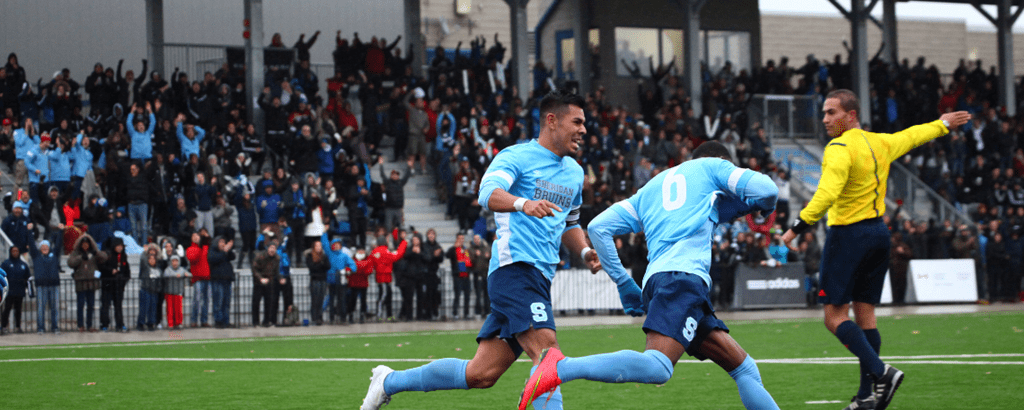
Sheridan Alum Elwin Lau leads medical operations for FIFA World Cup 2026
When the world's biggest sporting event kicked off across Canada, Mexico, and the United States, millions of fans filled stadiums without a second thought about what would happen if something went wrong. That was exactly the point. Behind the scenes was Certified Athletic Therapist Elwin Lau, Sports Injury Management ’01. Lau was responsible for building the medical infrastructure that protected players, staff, VIPs, and spectators in Toronto and Vancouver. His role as Senior Medical Manager, Canada for FIFA World Cup 2026 was the culmination of a path that began organizing first-aid coverage for intramural sports.
 "The World Cup is the largest single-sport event in the world and 2026 was the largest World Cup ever staged. Being part of an event of this scale and significance was both professionally challenging and incredibly rewarding," Lau told us as we talked about the depth of his role, and what some of the highlights for him throughout the tournament.
How did you land your role at FIFA?
In my third year of university, before attending Sheridan, I was given the opportunity to organize first-aid coverage for all intramural sports. While it may have seemed straightforward, the role required leadership, teamwork, supply management, scheduling and the development of operational protocols – skills that are fundamental to effective medical services leadership. Looking back, it was my first experience organizing healthcare delivery in a sport environment.
After graduating from Sheridan and becoming a Certified Athletic Therapist, I had the opportunity to work as a therapist with a provincial sport organization, which led to a role with a national sport organization. Through these experiences, I was able to progress to organizing medical coverage for national championships and international tournaments.
Those early opportunities became the foundation of a career in medical operations and event healthcare planning. Over time, I have helped develop and lead medical services for increasingly complex events, including international tournaments, the Canada Games, World Cup qualifiers, the Pan American and Parapan American Games, the Invictus Games, the Commonwealth Games and now the FIFA World Cup 2026.
Tell us a bit about your day? What kinds of things were you working on?
My role with World Cup 2026 was entirely non-clinical, as have been all my roles in organizing medical services for major international sporting events. Rather than providing direct patient care, my focus was on building the systems, partnerships and operational plans that enable medical teams to deliver safe and effective care.
My days were filled with meetings and collaboration with stakeholders across Canada and internationally, most often virtually and occasionally in person at venues and host cities in Canada and the USA. A significant part of my responsibility was ensuring that the right people, resources, and processes are in place to support tournament operations. This included workforce planning, procurement, logistics, budgeting, policy development and contingency planning, all of which were essential to delivering medical services at the scale of a World Cup.
I also ensured that comprehensive medical pathways and systems were established to support players and team delegations, FIFA staff, VIPs, rights holders, contractors, and the thousands of personnel who contributed to the tournament's success in Toronto and Vancouver. These plans extend from the field of play to training sites, team hotels, stadiums and the communities surrounding the venues.
Equally important was ensuring that spectators attending matches in Canada's host stadiums had access to safe, effective, and coordinated medical care if needed it. Success in a role like this is measured not by the medical care I personally provide, but by how effectively I enable healthcare professionals and partner organizations to work together within a system designed to deliver the care needed.
What was the most rewarding part of your work at FIFA?
The most rewarding part of my work was knowing that, in some way, I helped make a lifelong dream come true for many people.
Through my role, I had the opportunity to meet spectators, colleagues, players and team staff from around the world. For many of them, attending or being involved in a World Cup is a once-in-a-lifetime experience – something they have dreamed about since they were children. Knowing that my work contributed to creating a safe and successful tournament that allowed those experiences to happen was incredibly fulfilling.
Walking into a stadium filled with energy and excitement, hearing the roar of the crowd, and seeing the joy on people's faces as they witness something truly special made all the long hours, planning, stress and challenges worthwhile.
It looks like you've worked with a variety of national teams. Why did you want to work with FIFA?
My work with national teams is largely clinical. As a Certified Athletic Therapist, I have the opportunity to work directly with athletes, help them overcome challenges, stay healthy and achieve their performance goals. There is a tremendous sense of satisfaction in supporting an individual athlete or team as they pursue success on the world stage.
Working with an organizing committee or an organization like FIFA allows me to expand that impact beyond a single athlete or team.
There is also a unique sense of pride that comes with this role. There is only one person in Canada serving in my position. To be entrusted by FIFA with this responsibility – to help lead and develop medical services for the largest sporting event in the world – was both a tremendous honour and a privilege.
What's next in your career after the World Cup ends?
I have no specific plans. If the phone rings, I will answer. If someone has a line on an interesting role or event, I will have a look. Large events like this always involve a lot of sacrifice timewise, emotionally and psychologically, so I will take some time to decompress and reconnect with my family.
Media Contact
For media inquiries, contact Sheridan’s Communications and Public Relations team.